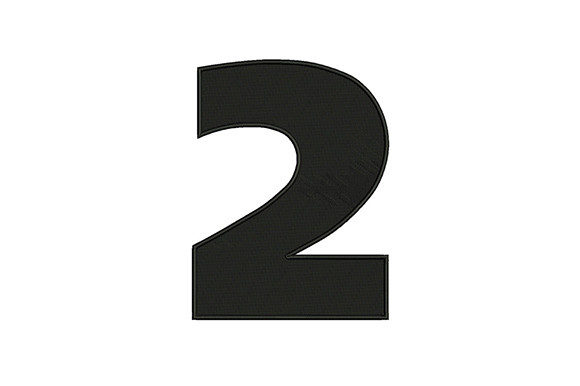
Number 2: A Practical Blackwork Design Review
As a designer who has spent years navigating the intersection of digital art and physical thread, I approach every new machine embroidery design with a critical eye. It is not enough for a file to look good on a screen; it must translate seamlessly into a tangible, high-quality finished product. Recently, I tested Number 2, a blackwork embroidery design marketed as a fun and easy stitch for back-to-school projects. My goal was to determine if this digital embroidery file holds up under the scrutiny of a professional craft business or if it belongs strictly in the realm of casual hobbyist experimentation.
First Impressions: Simplicity Meets Utility
The moment I loaded Number 2 into my digitizing software, the intent became clear. This is not a design cluttered with excessive shading or complex gradients. Instead, it relies on the classic principles of blackwork: bold lines, negative space, and a distinct graphic quality. The shape is clean, and the layout suggests a design that prioritizes readability over intricate detail. For an Etsy seller or a small shop owner looking for quick-turnaround items, this simplicity is a major asset. It promises a low risk of thread breaks and a high probability of a crisp result, even on fabrics that might challenge more delicate patterns.
The visual personality of Number 2 is straightforward and versatile. It does not scream "luxury," but it certainly whispers "reliable." In the context of a Back To School theme, this understated style works beautifully. It avoids the chaotic energy often found in seasonal designs, offering instead a timeless look that parents appreciate. Whether you are creating a personalized gift for a second-grade student or branding a line of school supplies, the design's clarity ensures it remains legible from a distance.
Real-World Application: From Screen to Fabric
To truly evaluate Number 2, I moved beyond the mockup stage and stitched it onto several different substrates. The first test was a heavy-duty cotton canvas tote bag, a staple for any craft business. The design performed exceptionally well here. The fill stitch areas were dense enough to cover the fabric without bleeding through, while the outline remained sharp. Because the design is relatively simple, the stitching time was minimal, allowing me to produce a batch of tote bag designs efficiently. The result was a sturdy, professional-looking item that felt like a legitimate boutique product rather than a rushed DIY project.
I also tested the design on a dark gray sweatshirt, aiming for a sweatshirt embroidery piece suitable for older students. Here, the choice of thread colors became critical. Since Number 2 is a blackwork design, using a contrasting white or bright neon thread created a striking visual impact against the dark background. The stitch density held up well, preventing the fabric from puckering, which is a common issue when embroidering numbers on stretchy materials. However, I did notice that on very thin jersey knit, the tension needed careful adjustment to prevent the design from distorting the fabric's natural drape.
For those interested in baby embroidery or nursery decor, the rounded edges of the number make it a safe and soft option. I envisioned this design on a pillow cover or a kitchen towel, where the tactile nature of the thread adds a layer of warmth to the item. The design's scalability means it can be enlarged for a blanket or reduced for a small embroidered patch without losing its structural integrity, provided you respect the minimum size requirements for your specific machine.
Navigating Challenges and Limitations
While Number 2 is undeniably user-friendly, it is not without its limitations. As with any machine embroidery design, context matters. I would advise caution when using this design on highly textured fabrics, such as boucle or thick fleece. The uneven surface can cause the needle to miss stitches or create gaps in the running stitch elements, leading to a messy appearance. Similarly, on curved surfaces like caps, the flat geometry of the number might require significant stabilization to prevent distortion during the stitching process.
Another consideration is the hoop size. While the description mentions multiple embroidery file formats, you must verify the dimensions before committing to a project. If you attempt to shrink the design too much to fit a tiny hoop, the stitch density may become too tight, causing thread buildup and potential breakage. Conversely, stretching it too large could leave unsightly gaps in the fill areas. Always check the hoop size compatibility and use a proper stabilizer to ensure the design sits flat and secure.
Furthermore, while the design is described as "fun and easy," do not skip the testing phase. Always run a test on scrap fabric first. This allows you to adjust the tension, check for thread colors contrast, and inspect small details that might get lost in the final product. For commercial applications, this step is non-negotiable. A single flawed stitch on a customer order can damage your reputation as a small shop product creator.
Strategic Value for Creative Entrepreneurs
For the creative entrepreneur, Number 2 offers more than just a pretty pattern; it offers efficiency. In the fast-paced world of commercial embroidery, time is money. Designs that stitch quickly and reliably allow you to fulfill orders faster and maintain higher profit margins. The clean aesthetic of this blackwork design also lends itself well to printable mockups, making it easier to showcase your work online before production begins.
When building a brand around custom apparel or holiday gifts, consistency is key. Number 2 provides a consistent visual element that can be used across various products, from aprons to hats. Its neutral yet playful vibe makes it adaptable for different seasons, extending its utility beyond just the Back To School season. You could easily repurpose it for birthday parties, sports teams, or anniversary gifts, simply by changing the accompanying text or color scheme.
However, remember to confirm licensing terms before selling finished items or digital products. Not all design assets come with commercial rights, and violating these terms can lead to legal issues. Ensure that the license associated with Number 2 aligns with your business model, whether you are selling physical goods or offering the file itself as a digital product.
Final Verdict: A Solid Staple for Your Toolkit
In conclusion, Number 2 is a reliable addition to any designer's library. It excels in scenarios where clarity, speed, and versatility are paramount. While it may not offer the complexity of a full-color applique design, its strength lies in its execution. It is a design that respects the medium of Embroidery by working with the grain of the fabric and the mechanics of the machine, rather than fighting against them.
Whether you are a seasoned apparel decorator or a hobbyist looking to start a side hustle, this design provides a solid foundation for creating high-quality, marketable items. By paying attention to fabric choice, stabilizer usage, and proper testing, you can ensure that Number 2 delivers the professional finish your customers expect. In a market saturated with trends, sometimes the most valuable tool is a simple, well-executed classic that just works.